Confirm any lien is discharged
Alberta Car Selling Paperwork Guide
We Come to You, You Get Paid on the Spot
Same-day pickupMost Edmonton sellers go from first call to cash in hand the same day.
Free towingFree towing, paid on the spot.
10+Years in business
100+Cars Scrapped Monthly
5 StarRating
Selling a Car in Alberta — The Paperwork, Explained Plainly
Alberta's vehicle transfer process is simpler than most people expect, but it's structured differently from other provinces and from most of the United States, which is where the confusion usually comes from.
The biggest difference: Alberta does not issue a vehicle title document. There is no single piece of paper that says "this person owns this car." Instead, ownership is established through a chain of documents — most importantly a bill of sale — and the registration certificate proves the vehicle is registered, not who owns it.
Once that clicks, the rest is straightforward. Here's the whole process.
This is general information, not legal advice. Requirements can change, and unusual situations exist. An Alberta registry agent can confirm anything specific to your circumstances.
What You Need to Sell a Vehicle
- 1. Proof of ownership. Usually the vehicle registration certificate in your name. If your situation is different — an estate, a company vehicle, a gift, a previously financed vehicle — see the specific sections below.
- 2. Photo identification matching that documentation.
- 3. A bill of sale. Not optional in any practical sense. Details below.
- 4. Your licence plates removed before the vehicle leaves.
- 5. A lien discharge, if the vehicle was ever financed.
That's the core of it. Everything else is situational.
The Bill of Sale
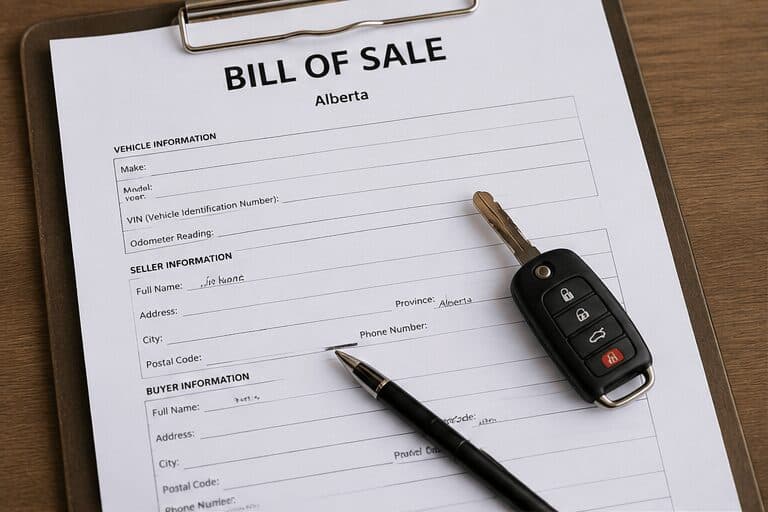
This is the single most important document in an Alberta private vehicle sale, and it protects the seller more than the buyer.
Why it matters: until a transfer is documented, the VIN remains associated with you. If a vehicle is later abandoned, dumped, involved in an incident, or accumulates tickets and towing charges, the trail leads back to the last documented owner. A bill of sale is your proof of exactly when that stopped being you.
Keep your copy. Store it somewhere you can find it years later, not in the glovebox of a car you no longer own. There's no fixed form required in Alberta — a clearly written document with those fields is sufficient — though many registry agents provide a template.
What it should contain:
- Full names and addresses of both the seller and the buyer
- The date of sale
- The VIN (vehicle identification number) — the most important field on the document
- Year, make and model
- Odometer reading at the time of sale
- The sale price
- A clear statement of condition — "sold as-is, where-is" is standard for private and end-of-life sales
- Signatures from both parties
Licence Plates
This trips up people moving to Alberta from elsewhere, so it's worth being explicit.
In Alberta, licence plates belong to the registered owner — not to the vehicle. They do not transfer with a sale. Ever.
What that means:
- Remove your plates before the vehicle leaves your property. Not after. Once it's on a tow deck and gone, retrieving them becomes somebody else's problem and usually means replacing them.
- You can keep them and transfer the registration to your next vehicle, which is what most people do.
- Or return them to any registry agent if you don't need them.
- Out-of-province plates should go back to that province's issuing authority, not an Alberta registry.
A buyer cannot legally drive away on your plates, and if a vehicle is being towed away it doesn't need plates at all.
Registration and Insurance
Registration. In Alberta the buyer registers the vehicle in their own name at a registry agent. As the seller, you don't file a transfer — your responsibility ends with providing accurate documentation and the bill of sale. If you're keeping the plates, you can move the registration to a replacement vehicle.
Insurance — cancel after the sale, not before. Two reasons. First, you may still need coverage right up until the vehicle physically leaves. Second, Alberta's insurers are private, and cancelling mid-term often means a prorated refund on the unused portion of your premium. Call your broker or insurer once the sale is complete and ask specifically about a refund — it isn't always offered unprompted.
If the vehicle has been sitting non-operational for a long time, it's worth checking whether you're still paying for coverage and registration on something that hasn't moved in three years. People frequently are.
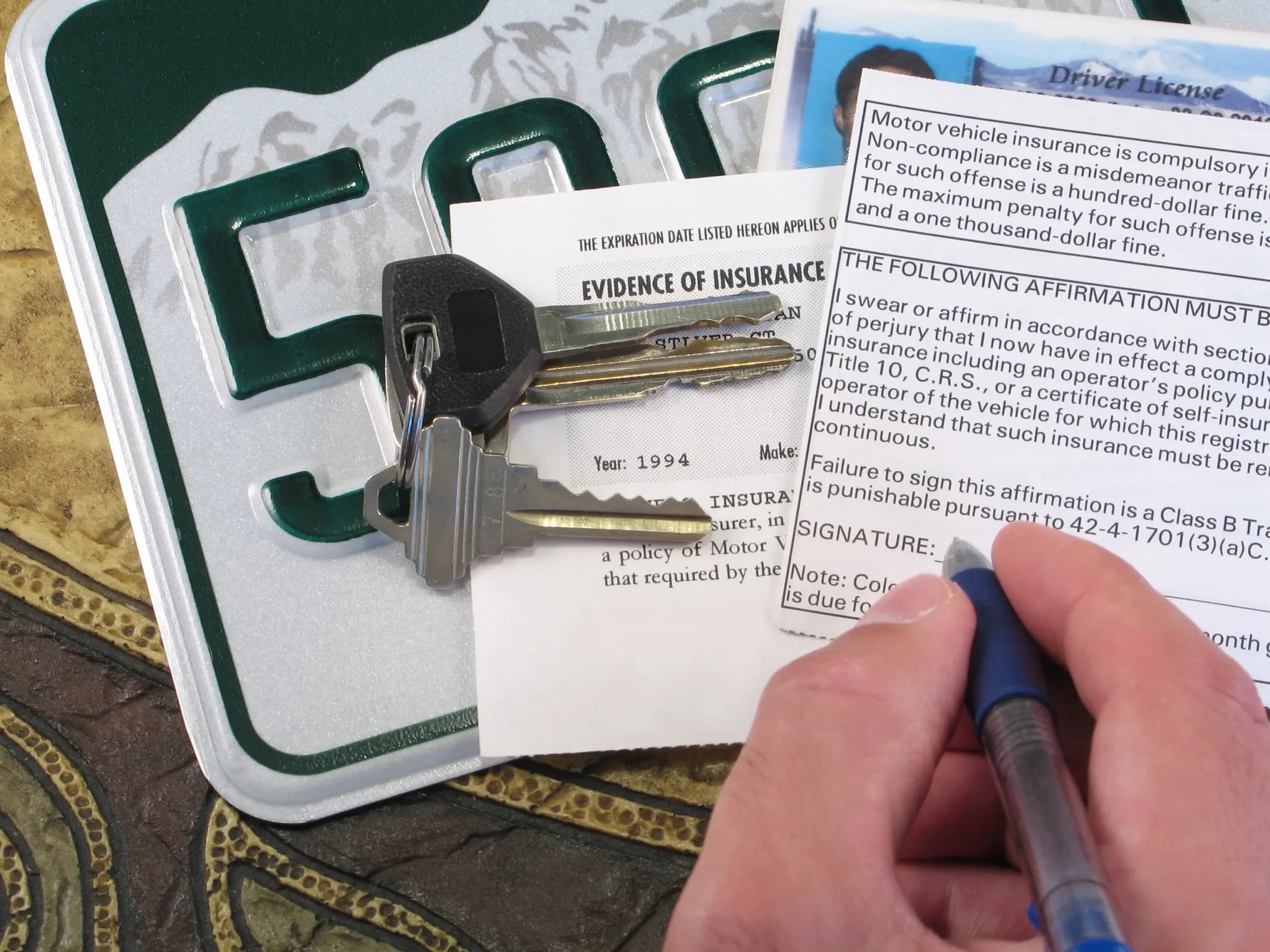
If the Vehicle Was Ever Financed
This is the most common thing that stops a sale, so check it early rather than on the day.
A lien is a legal claim registered against the vehicle through Alberta's Personal Property Registry. While a lien is active, the lender has a claim on the vehicle, and it cannot be cleanly sold.
If your loan is fully paid out, the lien should have been discharged. Confirm that it actually was, rather than assuming — discharges aren't always filed promptly, and an undischarged lien on a paid-off loan will surface at exactly the wrong moment. You can run a search through the Personal Property Registry via a registry agent.
If the loan is still active, it needs to be paid out before the sale completes. On an end-of-life or written-off vehicle worth less than the remaining balance, that means covering the shortfall yourself. Unwelcome, but far better discovered now.
If the vehicle was written off and you're still financing it, your insurer's payout typically goes to the lender first, with any remainder to you.
No buyer can remove a lien for you. Anyone who says otherwise is either mistaken or proposing something you don't want to be involved in.
Estate Vehicles
When the registered owner has died, the vehicle forms part of the estate and can only be sold by someone with authority to act for it.
What's typically needed:
- The death certificate
- Documentation establishing authority — commonly a grant of probate, letters of administration, or other estate documentation depending on the size and structure of the estate
- The vehicle registration and photo ID for the person signing
Smaller and simpler estates sometimes have a lighter path. If you're an executor and unsure what applies, a registry agent can tell you what's needed for your specific situation before you start gathering documents — which saves a great deal of unnecessary effort.
Estate vehicles are common in our work, and the documentation is usually what sets the timeline, not availability.
Company and Farm Vehicles
If the vehicle is registered to a corporation, partnership or farm operation rather than an individual, the person signing needs documentation showing authority to sell on the entity's behalf. Bring it with you rather than expecting to sort it at pickup.
Out-of-Province Vehicles
If your vehicle is still registered in another province, you can still sell it. Ownership documentation from that jurisdiction is valid proof of ownership.
A related situation catches a lot of people who move to Alberta: bringing a vehicle here requires an Out of Province inspection before it can be registered. On an older vehicle, the repair list needed to pass can easily exceed what the car is worth — leaving it unregisterable and undriveable. That's a completely normal reason to sell, and it doesn't reduce what an end-of-life buyer will pay, since they aren't registering it either.
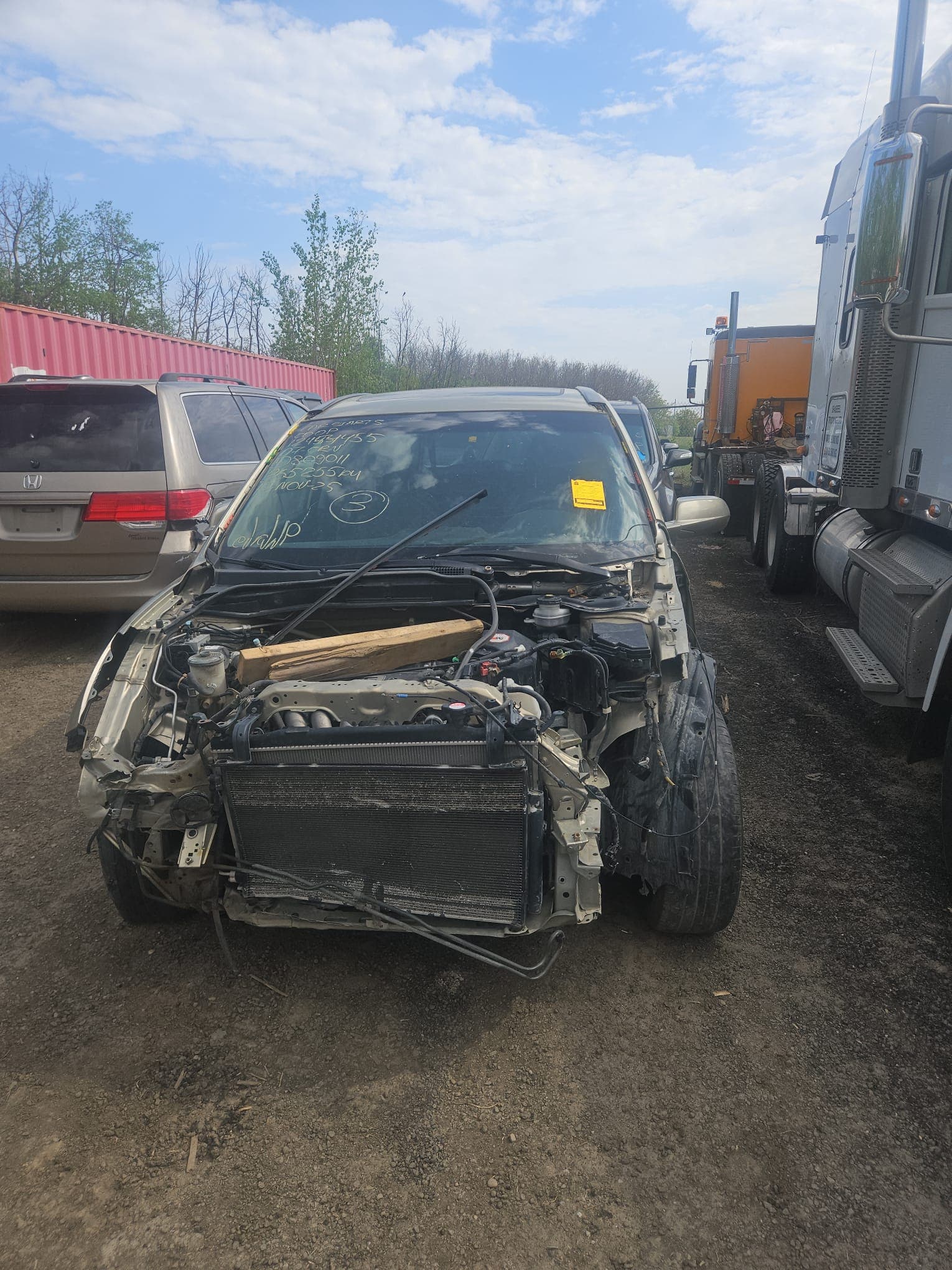
Salvage and Non-Repairable Branding
When a vehicle is declared a total loss by an insurer in Alberta, its status is recorded against the VIN. The two you'll encounter most:
- Salvage — repairable, but requiring inspection before it can be registered and driven again
- Non-repairable — parts and scrap only; it will not return to the road
That status is permanent and appears on any vehicle history report. Practically, a branded vehicle sells at a steep discount, most retail buyers avoid them, financing and full coverage become difficult, and dealerships generally won't take one on trade.
You can absolutely still sell a branded vehicle — just be aware that its retail value and its value to a parts and recycling buyer are two very different numbers.
What You Don't Need
- No safety or mechanical inspection is required to privately sell a vehicle already registered in Alberta
- No emissions testing is required in Alberta
- No title document, because Alberta doesn't issue one
- The vehicle doesn't need to run, be registered, be insured, or have plates in order to be sold to a buyer who tows it away
Before the Vehicle Leaves — A Checklist
Gather proof of ownership and photo ID (plus estate or company documentation if applicable)
Remove your licence plates
Clear all personal belongings — under the seats, the spare tire well, behind the visors, the glovebox, the centre console. Nothing comes back.
Remove any toll or parking transponders, garage remotes and spare keys you want to keep
Take a photo of the odometer and the VIN for your own records
Sign the bill of sale and keep your copy
Cancel your insurance afterwards and ask about a prorated refund
Selling to Us
If you're selling an end-of-life vehicle, we handle the bill of sale on site and walk you through anything unclear. You need proof of ownership, photo ID, and your plates off before we load. Everything else we can talk through on the phone before pickup.
We buy running, non-running, junk, scrap, hail-damaged and written-off vehicles across the Edmonton region — see cash for cars Edmonton — with free towing and payment before the vehicle is loaded.
Frequently Asked Questions
Is a bill of sale legally required in Alberta?
There's no mandated form, but it's the document that proves when the vehicle left your ownership. Never complete a sale without one.
Do licence plates go with the car?
No. In Alberta plates belong to the registered owner. Remove them before the vehicle leaves.
Do I need a safety inspection to
Not until the lien is discharged. Check this early.
Can I sell a car that isn't registered or insured?
Yes, to a buyer who tows it. It doesn't need to be roadworthy or registered.
What if the owner has died?
The estate sells it, through someone with documented authority to act. A registry agent can confirm what's needed for your situation.
Will I get an insurance refund?
Often, prorated for the unused term. Cancel after the sale and ask specifically.
Do I need the keys?
No. It's helpful, but not required for a tow-away sale.