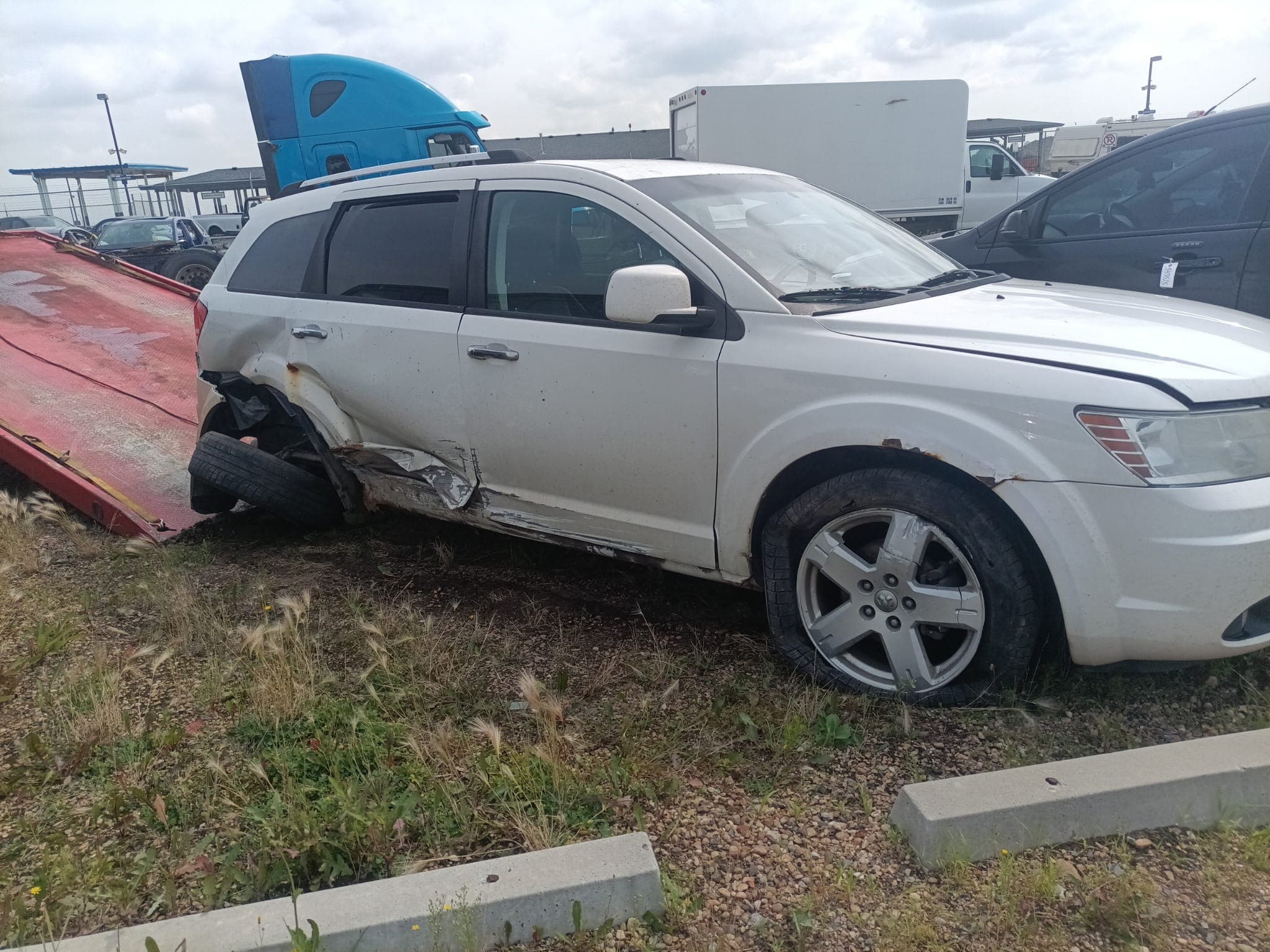
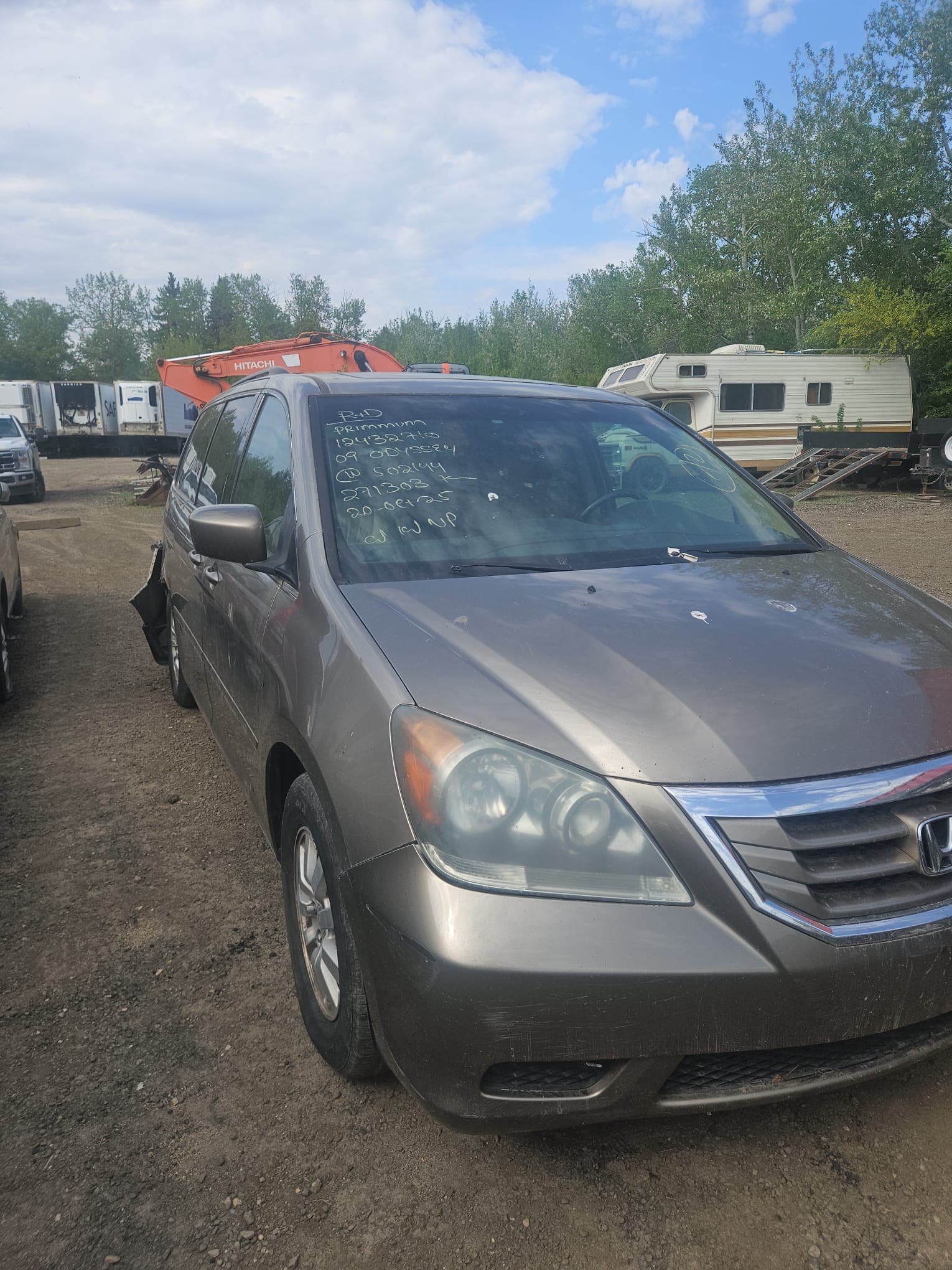
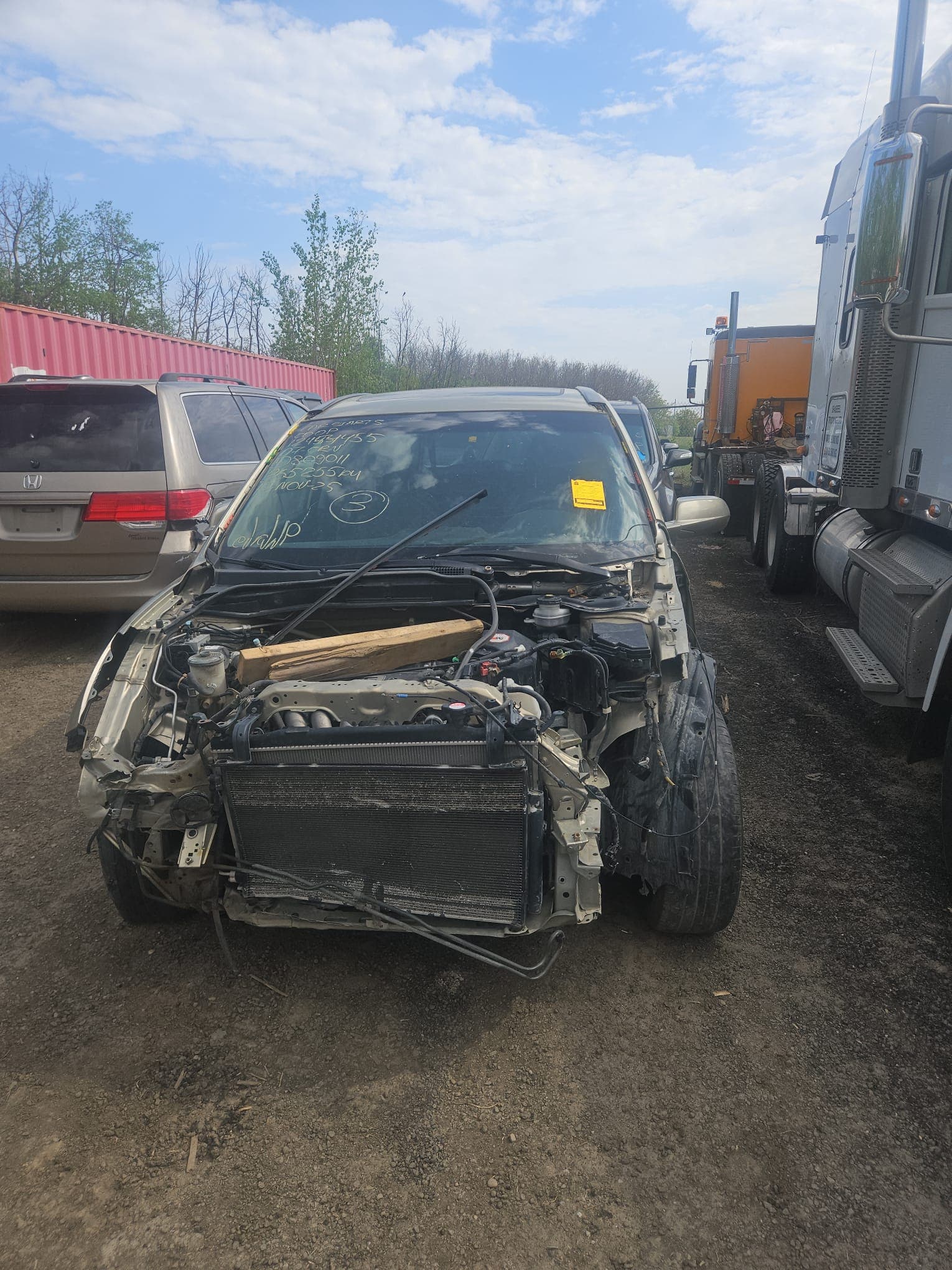
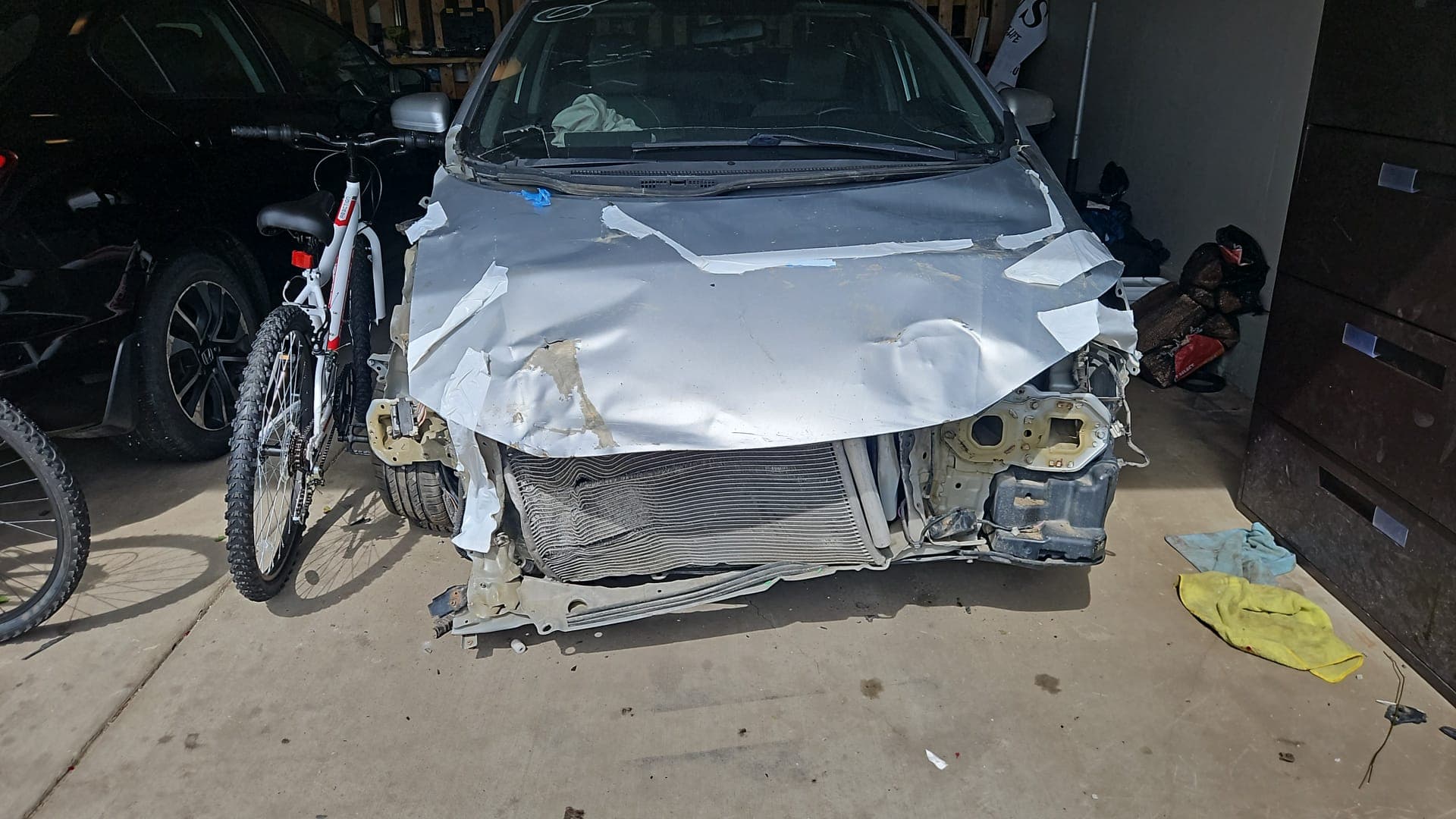
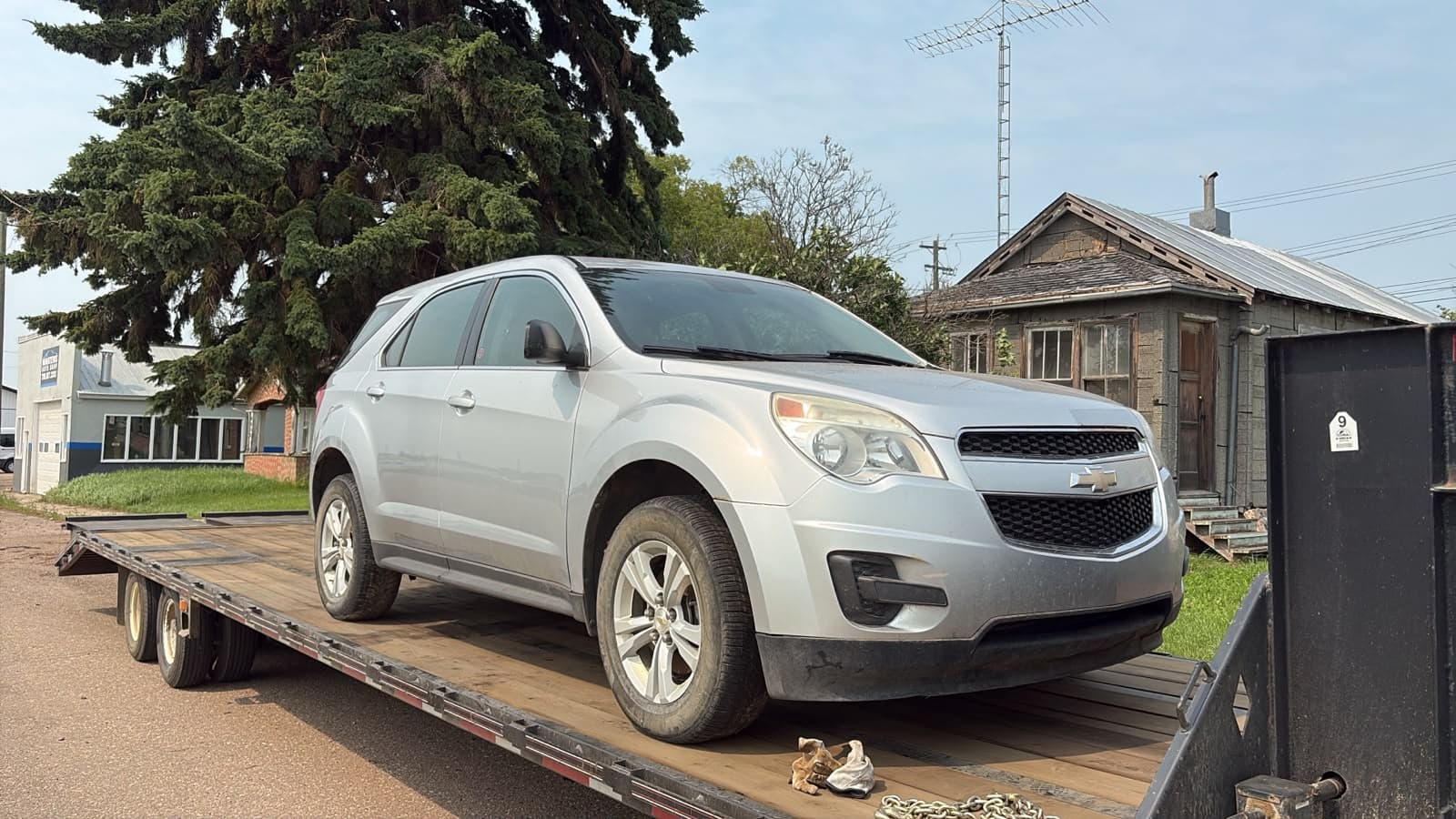
Tell us the count on the first call.
Four vehicles scheduled as one visit is dramatically more efficient than four separate dispatches, and that efficiency is reflected in what we can offer. It also means one afternoon instead of four appointments.

Morinville was founded in 1891 by Father Jean-Baptiste Morin as a French-Canadian Catholic settlement, and St. Jean Baptiste Church has anchored the community ever since. It grew as a farming town on the Highway 2 corridor north of St. Albert, and while a lot of the population now commutes into Edmonton, Sturgeon County agriculture is still what surrounds it.
That matters for what we do here. Farm properties don't dispose of vehicles the way town lots do. They store them. A quarter section has room behind the shop, in a shelterbelt, or along a fence line, and a vehicle that stops running simply gets moved there and left.
Which is why a Morinville call is often not "come get my car" but "there are four of them and I'd like the yard back."
Call (780) 202-2274 — tell us how many.
Four vehicles scheduled as one visit is dramatically more efficient than four separate dispatches, and that efficiency is reflected in what we can offer. It also means one afternoon instead of four appointments.
Year, make, model if you know it, whether the engine or transmission is still in it, whether wheels are on it, and how long it's been sitting. Vehicles that have been parted out over the years are still worth buying — the quote just reflects what's actually there.
This is the detail that determines whether the job goes smoothly. A vehicle that's been in soft ground for eight years has settled, and possibly grown into. Sod, mud, gravel and packed yard all behave differently under a winch. Distance from a usable approach matters more than distance from town.
Vehicles tucked into trees need an approach cleared or a longer winch line. Knowing in advance means the right truck goes out.
None of this costs you anything. Winching, awkward recovery and rural distance are all included — see free towing.

The single most common mistake we see on agricultural properties is someone accepting a scrap-weight offer on a truck.
Weight alone puts trucks ahead. A half-ton carries roughly double the recoverable metal of a compact car. A three-quarter or one-ton diesel carries close to triple. Since scrap value is fundamentally a function of mass, that gap exists before anyone assesses a single component.
Parts demand in Alberta widens it further. This province has one of the highest per-capita truck populations in the country, and rural Alberta especially. Transfer cases, differentials, transmissions, axles, alloy wheels, tailgates, boxes and mirrors for common half-tons sell fast here.
Heavy-duty diesels retain value even when the engine is finished. A Cummins, Duramax or Powerstroke with a dead engine still carries a heavy-duty transmission, a transfer case, front and rear axles, a turbo, injectors and a high-pressure fuel pump — all with real resale.
Mounted equipment is separately saleable. Decks, service bodies, headache racks, fifth-wheel hitches, tool boxes and compressors all add. Describe what's on it.
Full detail on cash for trucks and SUVs.
The residential side of Morinville is straightforward. Neighbourhoods like Lakewood, Sunshine Lake, Woodhaven, South Glens, Westwinds, Champlain and Notre Dame are full of households commuting south on Highway 2 into St. Albert and Edmonton.
That commute is hard on vehicles: highway kilometres accumulate quickly, winter brine on Highway 2 and Highway 642 works through brake lines and rocker panels from underneath, and freeze-thaw pothole season finishes off struts and front-end components. A twelve-year-old Morinville commuter has usually taken all of it, and often reaches a point where corrosion alone makes repair uneconomical even with a healthy engine.
When one stops being worth fixing, it typically gets parked rather than sold. Two winters later it won't start at all. We buy it anyway — see cash for non-running cars.
Throughout Morinville and across Sturgeon County — the farms and acreages along the Range Roads and Township Roads, out toward Bon Accord, Legal, Cardiff, Riviere Qui Barre and Calahoo.
Worth being direct about, because on agricultural land it's a real exposure.
A vehicle left sitting leaks its entire fluid load into the ground over a few seasons — engine oil, transmission and differential fluid, coolant, brake fluid, remaining fuel, plus battery acid. On farmland that's soil contamination, and remediation on a property is expensive in a way that dwarfs anything the vehicle is worth. Liability also tends to follow the registered owner, since the VIN stays attached to your name until a transfer is documented.
Every unit we collect is depolluted before anything else happens: fluids drained and captured separately, battery pulled for lead reclamation, refrigerant recovered rather than vented, tires into Alberta's recycling stream, mercury switches removed from older vehicles before shredding. The full sequence is on scrap car removal.
And you receive a signed bill of sale on every single vehicle — your documented record that it left your ownership on a specific date.

The base, and where farm trucks pull well ahead.
Often the highest-value single component, because of the platinum, palladium and rhodium inside. Higher-clearance trucks are the most common theft target in the region. Check underneath for a cleanly sawn section of exhaust and tell us either way.
Drivetrain condition, panels, glass, wheels, interior, plus any mounted equipment.
Reflected honestly, not arbitrarily.
Pricing mechanics on cash for scrap cars; parts valuation on cash for junk cars.

Proof of ownership for each vehicle — registration, or estate documentation, or a lien discharge if financed. Photo ID. Plates off before we load. Farm or company-registered vehicles need documentation showing signing authority.
On multi-unit clearances, gather the paperwork for all of them before the visit. That's usually what determines the scheduling date, not truck availability.
Full walkthrough on the Alberta paperwork guide. We also serve St. Albert, Bon Accord, Redwater, Westlock and the full service area.
Yes, and it's how we prefer to do it. Tell us the count on the first call so they're scheduled together.
Yes, and they're usually worth considerably more than people assume — weight plus strong Alberta parts demand.
Yes. Describe what's missing so the quote is accurate the first time.
Yes. Tell us the ground conditions and how far each sits from a usable approach.
Yes, with no distance charge and nothing deducted from your payout.
Yes — the transmission, transfer case, axles, turbo and injection system all retain real value.
Some form of ownership documentation for each, yes. Call and describe what you have and we'll tell you what's workable.
Call (780) 202-2274 with the vehicle details — or the count, if there's more than one — and the ground conditions where they're sitting. Firm numbers in minutes, free towing across Sturgeon County, cash on pickup.
Call (780) 202-2274