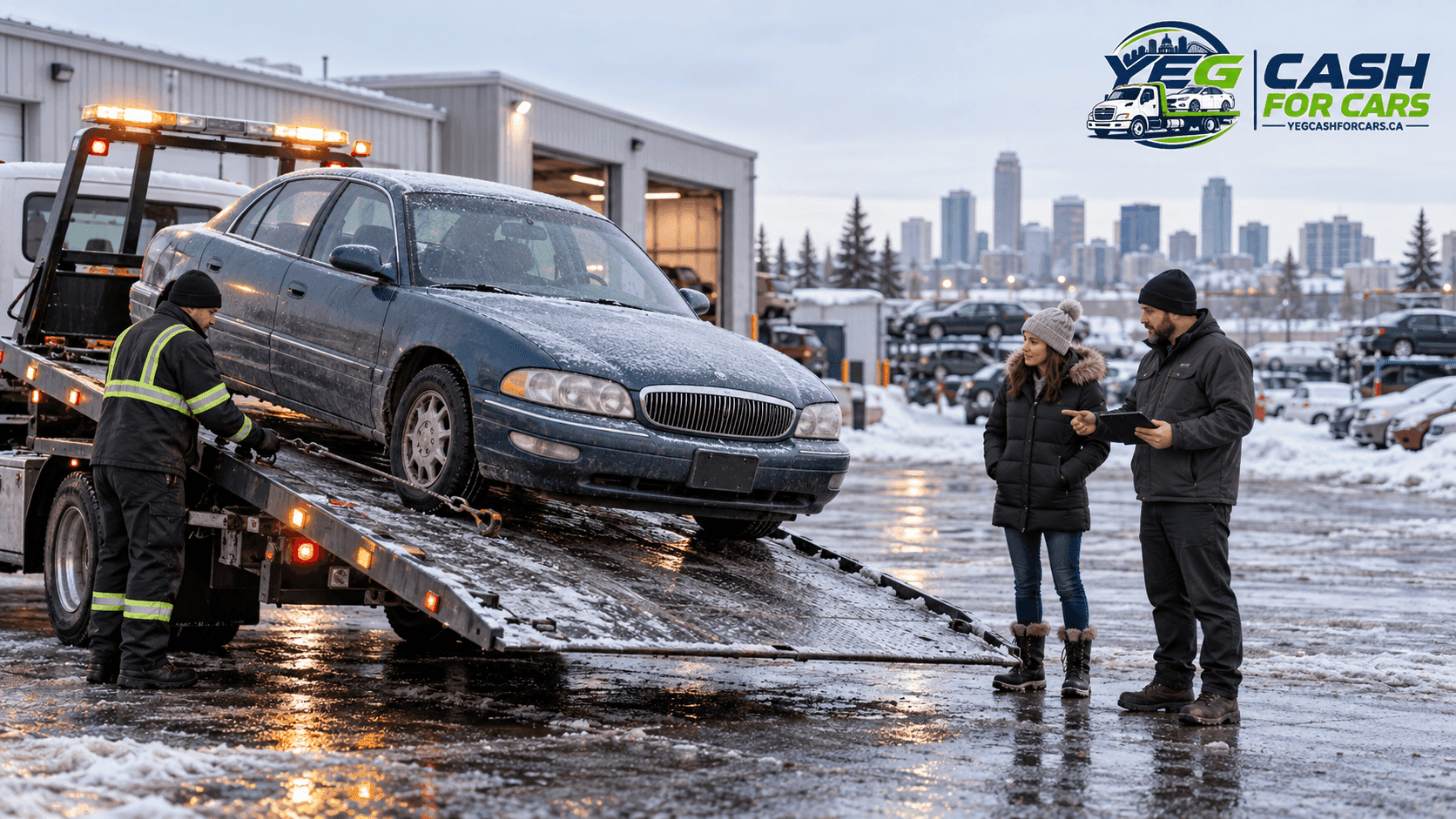
The breakdown itself is rarely the expensive part. What costs people money is the two weeks afterwards, when the car is sitting somewhere they did not choose, accumulating charges nobody mentioned, while they wait for a phone call.
If your vehicle has just been towed in Edmonton, or is about to be, here is the sequence that follows and the three points where it gets costly.
The First Decision Is Where It Goes
This gets made in about fifteen seconds at the roadside, usually by whoever is holding the phone, and it determines most of what follows.
A tow operator will ask where you want it taken. If you have no answer ready, the default is their yard or a shop they work with, and both of those start a storage clock. Having a destination in mind before the truck arrives is worth more than anything else in this article.
Three realistic destinations:
- Your own driveway or parking pad. Costs one tow, buys you unlimited time to decide. The best option whenever it is available.
- A shop you have chosen. Sensible when you already know roughly what is wrong and intend to repair it.
- A buyer, directly. If the vehicle is old and the failure sounds terminal, this skips every step in between.
The destination to avoid is somewhere you picked because it was the first suggestion. A car at an unfamiliar yard is a car you will be paying to visit.
What a Diagnosis Costs Before It Tells You Anything
Shops charge a diagnostic fee, and that fee buys an answer rather than a repair. On an intermittent fault or an electrical problem, it can take hours of labour before anybody can tell you what the actual repair will be.
That is a reasonable charge for skilled work. It becomes a problem when the diagnosis arrives and the number attached to it is larger than the car is worth, because you have now spent money to be told your vehicle is finished.
Two ways to limit that exposure. Ask for a cap before authorising any diagnostic work, so the shop stops and calls you rather than continuing. And tell them plainly that the vehicle is old and you are deciding whether to repair or sell, because a good shop will then prioritise a quick verdict over a thorough investigation.
Some failures are obvious enough from the symptom that a diagnosis adds little. A seized engine, a transmission that will not engage any gear, a blown head gasket with coolant in the oil, or a rusted-through brake line are all recognisable without a full workup.
The Part Nobody Warns You About: Storage and Liens
This is where a routine breakdown turns expensive, and it is the least understood part of the whole process.
Storage accrues daily. A vehicle sitting at a yard or a shop while you think about your options is costing money every day of that thinking, including weekends. Two weeks of indecision on a car worth a few hundred dollars can erase its entire value and then some.
Worse, a repair shop that has done work on your vehicle has a legal claim against it in Alberta for unpaid charges. In practice that means the car does not leave until the bill is settled, even if the bill is for a diagnosis you did not expect. Owners sometimes discover this when they arrange a pickup and find they cannot release the vehicle.
Three things protect you here:
- Never authorise work without an estimate and a cap, in writing where possible.
- Ask what the daily storage charge is before the car arrives, not after.
- Decide quickly. The cost of a fast decision that turns out slightly wrong is almost always lower than the cost of a slow correct one.
Running the Numbers Properly
Once you have a repair estimate, the comparison is straightforward, but most people run it against the wrong figure.
Compare the repair cost against what the vehicle would realistically sell for in working condition today. Not what you paid for it. Not what you still owe. Not what it would be worth if the body were tidier. The honest market number.
If the repair exceeds roughly half that figure, selling usually wins. If this is the second or third major failure within two winters, selling wins even at a lower ratio, because the next item is already queued behind this one. And add the charges already accumulated, because the diagnostic fee and the storage are sunk whichever way you decide.
Our page on cash for non-running cars walks through the repair-or-sell calculation in more depth, including which failures end a vehicle and which ones are cheaper than they sound.
If You Decide to Sell From Where It Sits
A vehicle at a shop, a yard or a roadside can be sold without being moved home first, which saves you a second tow. A few practical points make that go smoothly.
Settle any outstanding bill with the shop first, or at least establish exactly what is owed, because the vehicle cannot be released otherwise. Confirm the address, and whether there is yard access for a flatbed or whether a winch is needed. Collect your registration and identification, and remove your licence plate, which stays with you rather than the car in Alberta.
Then clear the vehicle of belongings properly. Registration documents in the glovebox, insurance slips, garage remotes, parking passes, anything in the boot or under the seats. People lose house keys and transit passes this way more often than you would expect.
Free towing covers collection from shops, yards and driveways across the Edmonton region, including vehicles that will not roll or start.
Frequently Asked Questions
Can I sell a car that is currently at a repair shop?
Yes, once any outstanding charges are settled. Tell the buyer it is at a shop when you call so the pickup is arranged with the right access.
Should I get the diagnosis before deciding?
Only if the symptom is unclear. For an obvious terminal failure on an older vehicle, the diagnostic fee buys information you will not act on.
The tow already cost me money. Does that change the decision?
No. That money is spent either way, so leave it out of the comparison and judge the repair on its own merits.
How fast can a non-running car be collected?
Often the same day across Edmonton and the surrounding towns. Speed matters here, because storage charges stop the moment the vehicle leaves.
The Short Version
A breakdown turns expensive in the gap between the tow and the decision, not in the failure itself. Pick the destination before the truck arrives. Cap the diagnostic spend. Find out what storage costs on day one. Then compare the repair against the car's honest working value and decide quickly, because every day of deliberation is billed.
If the number says the car is finished, our cash for cars Edmonton team quotes by phone, collects from wherever the vehicle currently sits, and pays before it is loaded.